

The Bible: The Book Most Christians Never Actually Investigate
How Power, Politics, and a Royal Ego Shaped the Book We Call Holy

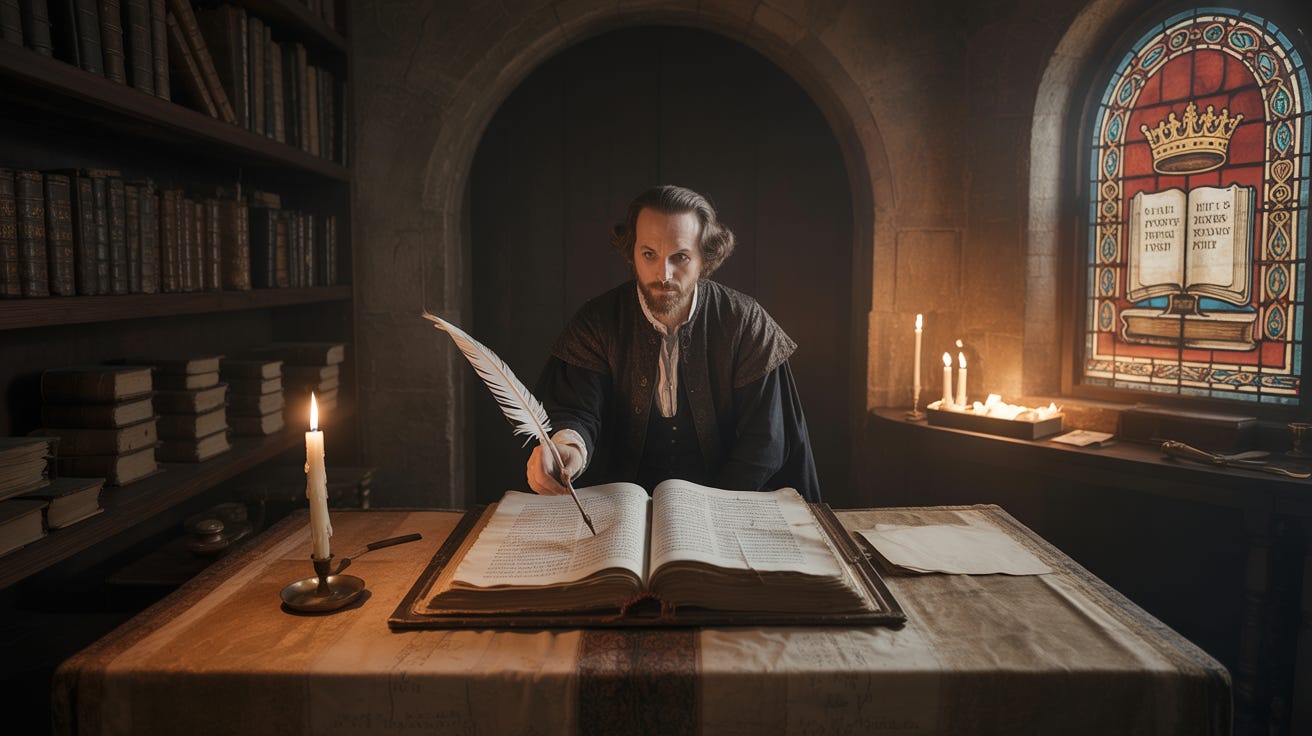
Let’s just say it plain: Most Christians have no idea where the Bible actually came from. They’ll quote it, fight over it, build their entire life around it—but ask them how it was put together, and you’ll get blank stares or half-baked answers like, “It’s the Word of God.”
Sure. But let’s talk about how it became the Word of God… at least, the version they’re holding in their hands.
Spoiler: It Didn’t Drop from the Sky Leather-Bound
The Bible didn’t come pre-packaged with red letters and gold trim. It wasn’t dictated from on high in English. And Jesus sure as hell didn’t speak King’s English, either.
What we call “The Bible” is a patchwork of letters, poems, legal codes, war stories, ancient myths, genealogies, parables, and prophetic visions written over the span of about 1,500 years by dozens of different authors—many of whom never met, and wouldn’t have agreed on much if they did.
These books were passed around, debated, copied by hand (with plenty of errors), and eventually cherry-picked by church councils centuries after Jesus lived. Some texts made the cut. Others got buried, banned, or burned.
The canon we know today? It was voted on. Literally.
Enter: King James and His Ego
Fast forward to the early 1600s, and we meet the man behind the most popular English Bible version ever printed: King James I of England.
Now let’s be real—King James wasn’t exactly a saint. He was a political schemer, known for his fondness for luxury, power, and, uh, let’s just say his close male friendships. He was obsessed with legacy, power, and unifying the Church of England under his rule. One way to do that? Commission a new Bible that would silence religious infighting and reinforce the monarchy’s divine authority.
So in 1604, King Jimmy ordered a group of about 50 scholars to whip up a fresh English translation. And they did a damn good job, poetically speaking. The language is beautiful—grand, rhythmic, and loaded with literary power. But make no mistake, it was also a political tool. The translators were told to ensure it upheld the authority of the king and the established church.
That’s why you'll never find “tyrant” used to describe a king in the KJV. It’s also why certain books were included, and others quietly left out.
So… What Are We Really Reading?
If you’ve ever wondered why books like the Gospel of Mary or the Book of Enoch are missing, it’s not because they weren’t important. It’s because they didn’t line up with the narrative the powers-that-be wanted to sell.
The Bible was—and still is—edited, translated, and interpreted through the lens of power. Politics, patriarchy, and papal decrees shaped the “Word of God” more than most folks are ready to admit.
And that’s not to say it doesn’t contain truth, beauty, and wisdom. It does. But treating it like it was faxed from Heaven is not only lazy—it’s dangerous. Because once you realize just how human the process was, you start asking the questions the Church never wanted you to ask.
Final Thought
If your faith is built on the belief that the Bible is 100% perfect, untouched, and infallible, then this might feel like spiritual whiplash. But if you’re someone who’s been feeling that itch—that quiet unease about the contradictions, the edits, the lost books—you’re not crazy. You’re waking up.
And I say: Keep going.
God’s not afraid of your questions.
But I guarantee you… plenty of pastors are.