

“If It Ain’t in the Bible, There Ain’t No Truth to It?”
On Faith, Fear, and the Courage to Wonder

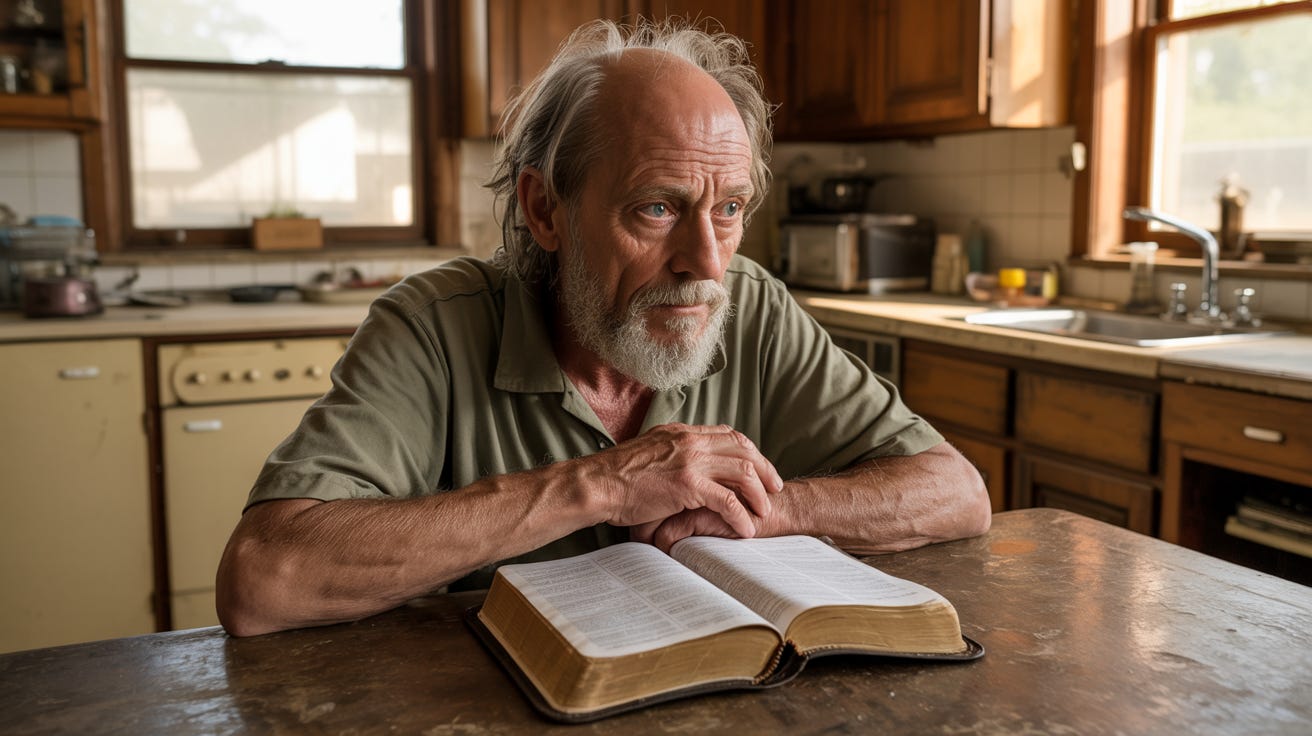
If you’ve followed my TikTok for more than five minutes, you know I don’t just preach what I’m told. I ask questions. I dig. I read—not only the Bible we all know, but the writings they left out: the Book of Enoch, the Gospel of Thomas, the Wisdom of Solomon, and others that once breathed alongside the texts we now call “Scripture.”
And almost every time I mention one of those lost or excluded books, the comments flood in faster than a spring creek after a thunderstorm:
“If it ain’t in the Bible, there ain’t no truth to it.”
“You’re leading people astray!”
“Stick to the Word!”
Now, I get it. That instinct—to cling to what’s familiar, to protect what you believe is holy—is real. Especially here in Appalachia, where faith isn’t just belief; it’s heritage. It’s Papaw’s worn-out Bible on the nightstand. It’s Sunday dinners after church. It’s the hymns that carried Grandpa through the coal dust and hard times.
But let me ask you something gentle—something I’ve wrestled with myself:
What if truth is bigger than one book?
Not instead of the Bible—but beyond the idea that the Bible is the only place truth can live?
Think about it: Jesus never held a bound, printed Bible. The New Testament didn’t exist in his lifetime. The canon—the official list of books we now call “the Bible”—wasn’t settled until centuries after he walked the earth. Church councils debated, argued, and voted on which writings were “in” and which were “out.” Politics, power, and regional theology all played a part.
That doesn’t mean the Bible isn’t sacred. It is. It’s filled with poetry that cracks your ribs open, parables that cut to the bone, and love that defies logic. But to say that nothing outside it can contain truth? That’s not faith—that’s fear.
Fear that if we admit other writings might hold wisdom, our whole foundation will crumble.
Fear that asking questions means we’re losing our way.
Fear that God isn’t big enough to speak in more than one voice.
But look at the Bible itself. It’s not a monologue—it’s a conversation. Job argues with God. The Psalms rage with doubt. Ecclesiastes calls life “vanity.” Even Paul says, “Now we see through a glass, darkly.” If the Bible itself admits we don’t have the full picture… why do we act like we do?
And what about the lost books? The Book of Enoch—quoted in Jude! The Gospel of Thomas, with its raw, earthy sayings of Jesus? They didn’t vanish because they were heretical. Many were set aside because they didn’t fit the emerging institutional church’s agenda. But that doesn’t mean they’re worthless. It just means they’re different. And sometimes, different is exactly what a weary soul needs.
I’m not telling anyone to throw out their Bible. I’m asking: What if God is still speaking?
Not just through 66 books—but through creation, through conscience, through ancient texts that echo the same longing for meaning, mercy, and mystery.
Here in the mountains, we know truth doesn’t always come from the pulpit. Sometimes it comes from the silence between the hoot of an owl and the rustle of dry leaves. From the way Mamaw’s hands folded in prayer, even when she doubted. From the stranger who shares their last biscuit without a word.
That’s the kind of truth I’m after. Not the kind that shuts doors—but the kind that opens them.
So if you’re one of the folks leaving comments, I don’t blame you. I’ve been there. But I’m asking you to consider this: Maybe your preacher is doing his best. Maybe your Bible is your anchor. But maybe—just maybe—there’s more light out there than we’ve been taught to see.
And that’s okay.
Because a faith that can’t handle a question
isn’t faith at all.
It’s a cage.
And you, my friend—whether you’re on a porch in Harlan or scrolling at 2 a.m. in some far-off city—
were made for sky. Not walls.
So let’s wonder together.
Let’s read.
Let’s listen.
And let’s never confuse “what we were told” with “what is true.”
— Big Dan
Thanks Big Dan,
Even as a pre-teen I wondered these very things. (I'm almost 60 now.) Especially when I found out how the books of the Bible were chosen.
Thank you. I have studied that same ole bible that we all do so many years but a lot did not make sense. There were always questions.